
Executive Branding 101: Why Your Story Is Your Strategy
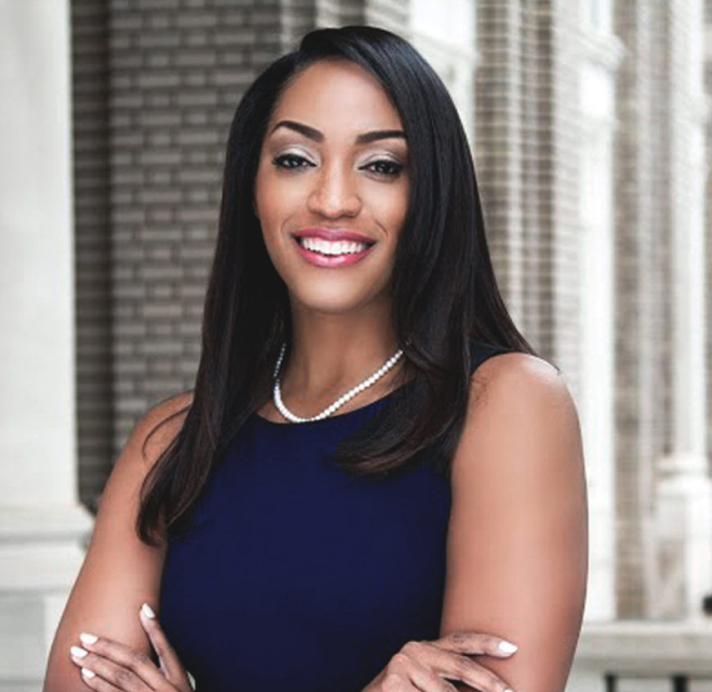
A guide to building a personal brand that actually holds weight — starting with the truth you already carry.
The Question Every Executive Eventually Asks
Somewhere between the promotion you earned and the room you're finally sitting in, a quiet question shows up: Who am I, beyond the titles?
I've asked myself that question in a lot of rooms. In desert fatigues during Air Force Reserve deployments. On the ground at the Pentagon in the recovery operations after 9/11, doing work that had no manual and no margin for error. In the founding meetings of what would become Future Foundation, which I led for seventeen years. At the table as Atlanta's Chief Equity Officer, building infrastructure for a city while it was still figuring out what equity work even meant in practice. In the halls of BlackRock, translating community strategy into capital markets language. And now, as the founder of ROAR, helping other leaders answer the same question I once had to answer for myself.
Here is what almost thirty years across military, nonprofit, government, and corporate life taught me: your resume tells people what you've done. Your story tells them why it matters — and why it will keep mattering. Executive branding that skips the second part is just a longer bio. It's not a brand. It's not a strategy. And it will not move a board, a donor, an investor, or a room the way a true story will.
This is Executive Branding 101 — the foundational thinking behind the Brand Brief™ work I built at ROAR, distilled for anyone ready to stop shrinking their narrative down to a job history.
1. Titles Are Credentials. Story Is Trust.
A title tells someone what you're authorized to do. A story tells someone what you're built to do — and that distinction is the entire game at the executive level.
When I sit across from a board, a client, or a funder, my title — CEO, Chief Equity Officer, founder — buys me exactly one thing: a seat. It doesn't buy trust. Trust gets built when people understand the why underneath the résumé line. Why does a former Chief Equity Officer with Pentagon recovery experience think about crisis differently than most consultants? Because she's stood inside actual crisis, without a playbook, and had to build the plan while living it. That's not a talking point. That's earned authority, and it only becomes visible when you're willing to tell the story that produced it.
The 101 takeaway: Before you polish another bullet point, ask what the credential is evidence of. That's your real material.
2. Purpose Is Your Differentiator, Not Your Decoration
Most executive bios lead with function — "20 years of experience in X, leading Y, delivering Z." Function is important. It is also, at the senior level, table stakes. Everyone in the room has function. What almost no one has is a clearly articulated purpose.
My purpose is to use human capital to ignite economic mobility so all communities can thrive. That single sentence has quietly organized nearly three decades of what would otherwise look like a scattered career — military service, a nonprofit I co-founded and ran for seventeen years, city government, global finance, and now an AI-powered narrative platform. On paper, those sectors don't obviously connect. Through the lens of purpose, they're one continuous throughline: building the conditions for people and communities to rise.
This is precisely what the Reveal stage of the ROAR framework is designed to surface — the themes and lived experience underneath a career that, without purpose as the organizing principle, would just look like a list of jobs.
The 101 takeaway: Purpose isn't a mission-statement exercise you do once and file away. It's the sentence that makes your entire career legible as one story instead of several unrelated ones.
3. Own It Before You Amplify It
There's a stage many executives skip, and it costs them: owning the story before trying to broadcast it. I see this constantly in the leaders I work with — deeply accomplished people who have done the hard, real work, and yet flinch when asked to claim it in their own words. They hedge. They minimize. They let a modest bullet point stand in for a story of real consequence.
I understand the instinct. There is a version of me that could have described the Pentagon work as "supported post-9/11 recovery operations" and left it there — technically accurate, emotionally absent, strategically wasted. Owning the story means being willing to say: I was there. I did hard things without a roadmap. That capacity is still in me, and it's part of what I bring to every room I walk into now.
You cannot amplify a story you haven't first given yourself permission to own. No brand strategy fixes that — only you can.
The 101 takeaway: Before you write a single word of copy, do the harder work of claiming your story out loud, to yourself, without the hedge.
4. Amplify With Evidence, Not Adjectives
Once you own your story, the instinct is to reach for bigger language — "visionary," "transformational," "disruptor." Skip it. The most persuasive executive brands I've built — for myself and for clients — are evidence-led, not adjective-led.
Don't tell a board you're resilient. Tell them you led a foundation for seventeen years through funding cycles that broke other organizations. Don't tell an investor you understand systems. Tell them you built equity infrastructure inside a major U.S. city government from the ground up, with no precedent to follow. The adjective is a claim. The story is proof. Rooms full of decision-makers have heard every adjective. They remember proof.
This is the discipline behind a strong Brand Brief: messaging pillars and a voice guide that are anchored to real, specific, lived evidence — not aspirational language borrowed from someone else's LinkedIn About section.
The 101 takeaway: Every claim in your branding should be able to answer the question, "Prove it" — instantly, and with a real story.
5. Your Story Doesn't Just Build Your Brand. It Builds Your Room.
The final stage of the ROAR framework is Rise — and it's the part people most underestimate. A well-told story doesn't just make you sound impressive. It changes what rooms become available to you, and what you're able to do once you're inside them.
When I sit down with founders, rising talent, and fellow executives, the goal is never just a polished bio. It's a narrative foundation strong enough to carry someone into board seats, funding conversations, leadership transitions, and the kind of trust that opens doors quietly, without a pitch. That's what happened for the executive who told me ROAR gave her clarity she didn't know she needed — within months, her narrative aligned, her confidence returned, and she was leading her team with a strategic clarity she hadn't had language for before.
That is the actual return on investment of executive branding done right: not admiration, but access.
The 101 takeaway: Ask what your current brand is opening — and closing — before you assume the problem is your credentials rather than your story.
Where to Start
If you take nothing else from this guide, take this: your personal story and your purpose are not the "soft" part of your executive brand you get to once the strategy is done. They are the strategy. Everything else — your LinkedIn headline, your speaker bio, your thought leadership, your positioning in the room — is downstream of whether you've done the work to Reveal, Own, Amplify, and Rise into your own truth.
I built ROAR and the Brand Brief™ because I lived the alternative — years of letting titles speak for me while the real story sat underneath, unclaimed. I don't recommend it. The leaders who move furthest, fastest, are the ones who stop treating their story as background and start treating it as infrastructure.
Your story is not a luxury. It is oxygen. It is destiny learning to speak in your own voice.
Ready to build yours? Start your Brand Brief at roarimpact.ai.
Qaadirah Abdur-Rahim is the founder of ROAR, a narrative platform built around the Reveal, Own, Amplify, Rise framework. Her nearly 30-year career spans military service, nonprofit leadership, city government, and corporate strategy — including 17 years as co-founder and CEO of Future Foundation, service as Atlanta's Chief Equity Officer, and Head of Community Strategy at BlackRock.

Comments